

Sample pack

Sample survey pack preview

See the structure and navigation logic installers use to reduce callbacks and design re-questions.

This preview shows anonymised pages from the Vertex renewable survey system so your team can judge structure, evidence quality, and handoff clarity before booking.

Photos are evidence, not marketing. Sample packs are anonymised to protect privacy.

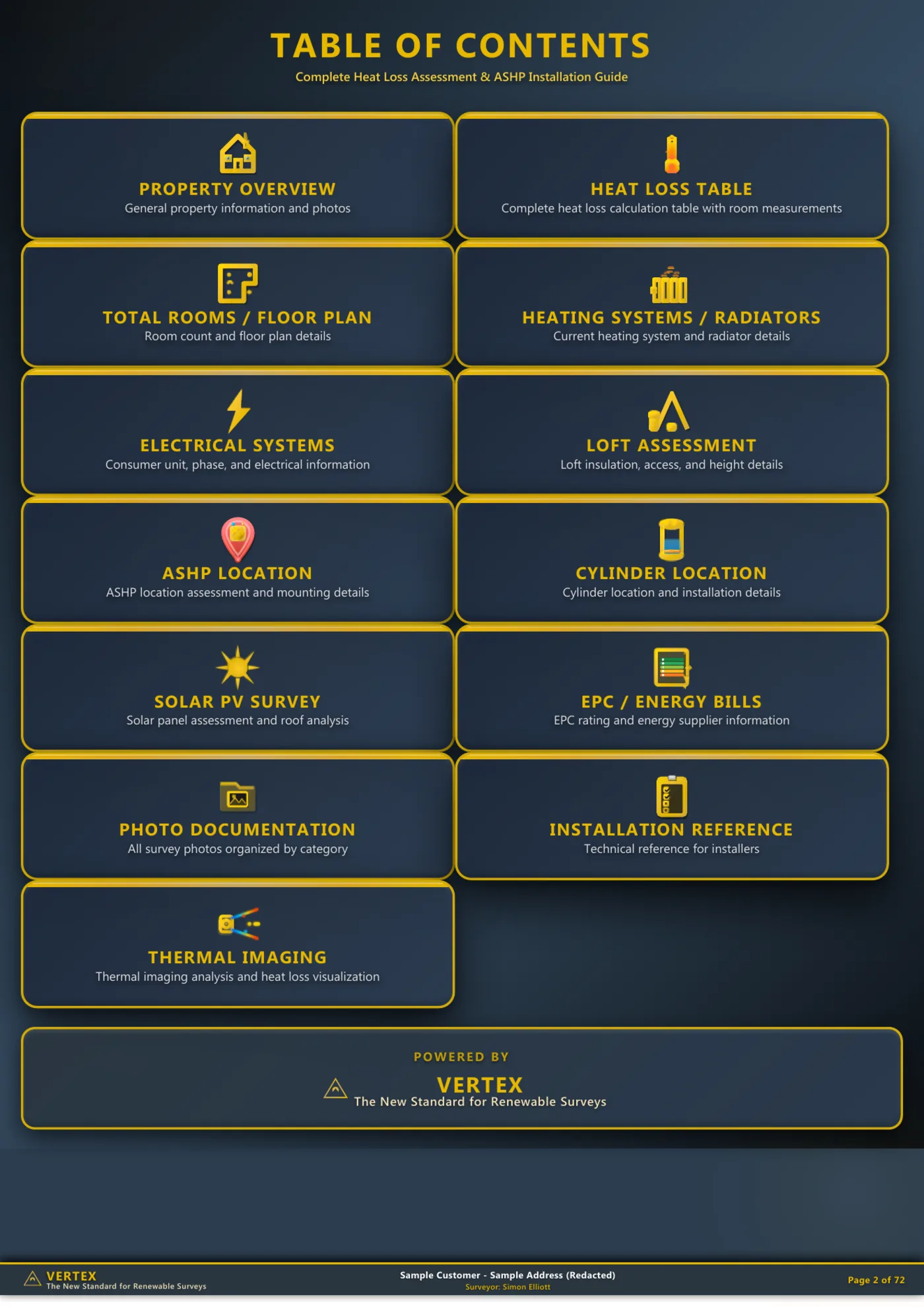
What you’ll see in the Vertex survey system

The goal is simple: the next person can move forward without re-questions. Each section follows the same workflow order across jobs.

Want the full positioning breakdown? See why Vertex exists.

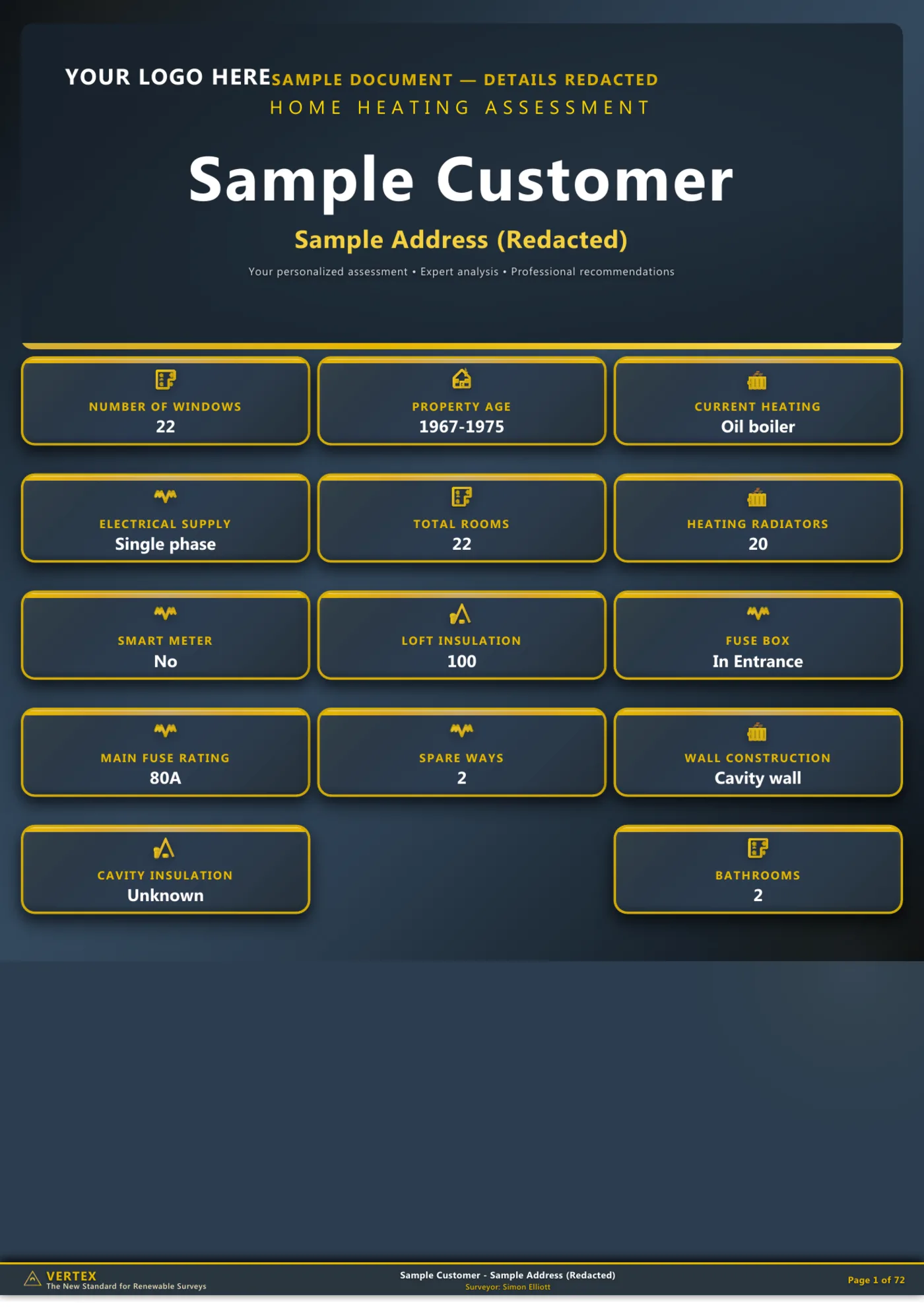
Sample pack cover page (anonymised)
Cover + summary. Quick context, job identifiers (anonymised), and a clean handoff start.
Sample pack floor plan example (anonymised)
Plans + measurements. Structured layout so designers and installers don’t hunt for inputs.
Sample pack electrical evidence example (anonymised)
Electrical evidence. Photos and notes captured once, reused through QC, design, and install.
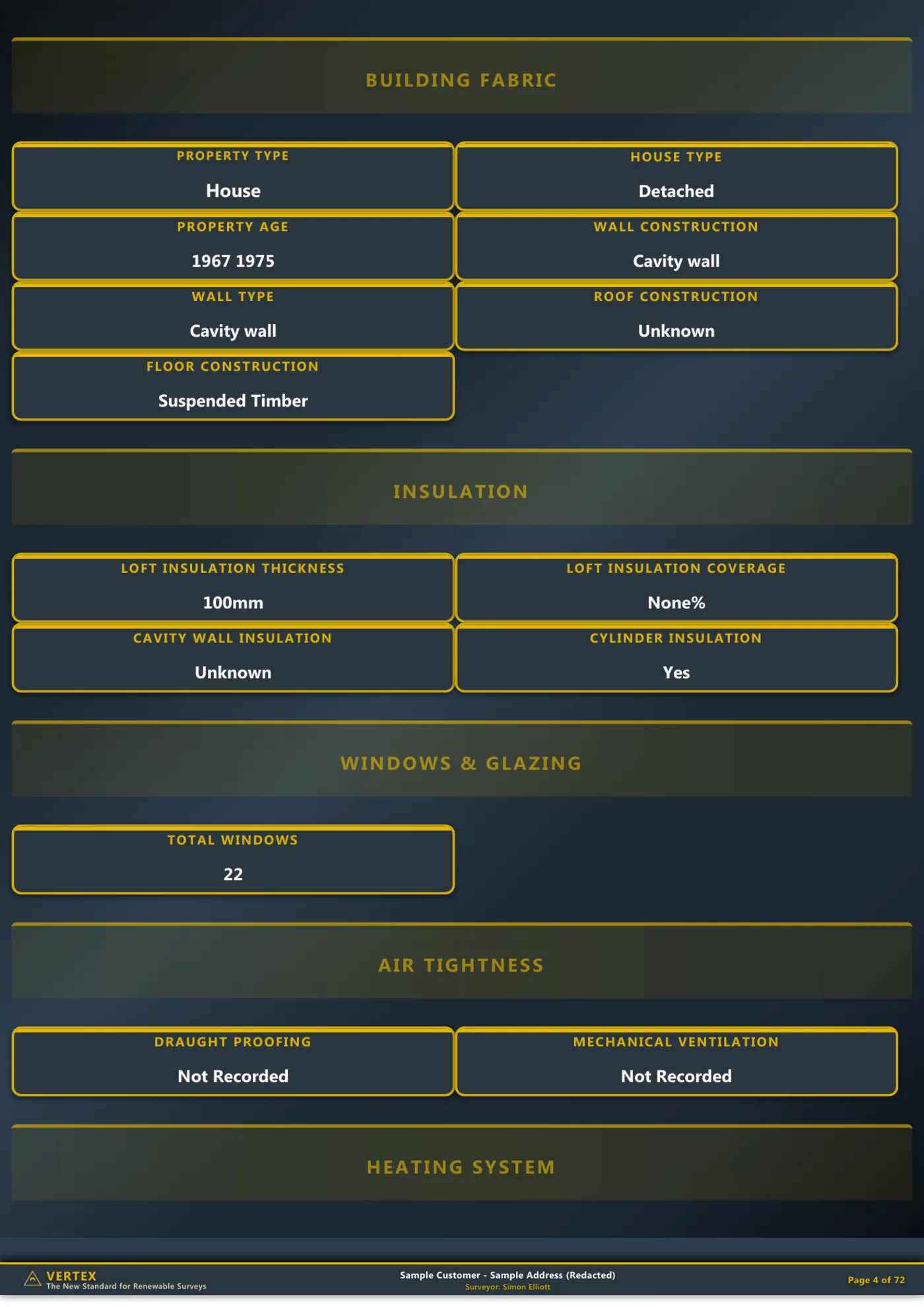
Sample pack evidence section example (anonymised)
Service sections. Evidence organised by category (access, routing, constraints) — not timestamps.

Inside the sample pack: section-by-section

Each preview image has a short blog-style breakdown so your team can judge practical value, not just visual polish.

Page 1

Cover and survey snapshot

The front page does more than title the job. It gives install and design teams a single first-read summary: property type, room count, window count, supply basics, and the top-level context needed before anyone dives into technical pages.

For busy teams this removes the usual start-up delay. Instead of opening several files to work out what the job is, they get one clean starting point and can move straight into review.

Page 2

Heat loss table and room evidence

This section is where coordination usually succeeds or fails. Room dimensions, window references, emitter context, and pipework notes are kept together so there is less risk of data being interpreted out of order.

The practical win is fewer internal re-questions. Teams can sanity-check assumptions room-by-room without returning to raw photo galleries or chasing survey clarifications.

Page 3

Electrical capture and constraints

Electrical evidence is presented as a working decision layer, not as random supporting photos. Meter, cut-out, and consumer unit views are grouped with context so planners can spot constraints quickly.

That reduces the back-and-forth that often appears late in the process. Instead of asking for extra photos after design begins, teams can qualify readiness earlier.

Page 4

Photo documentation that supports handoff

The evidence section is structured by purpose, not by upload time. Elevations, access routes, and supporting visuals are grouped so the next person can understand site context in a single read.

This is the difference between a pack that looks complete and one that is operationally useful. Clear grouping helps office, design, and install teams stay aligned from survey through delivery.